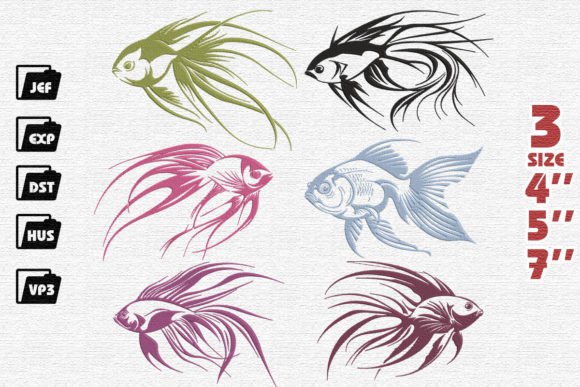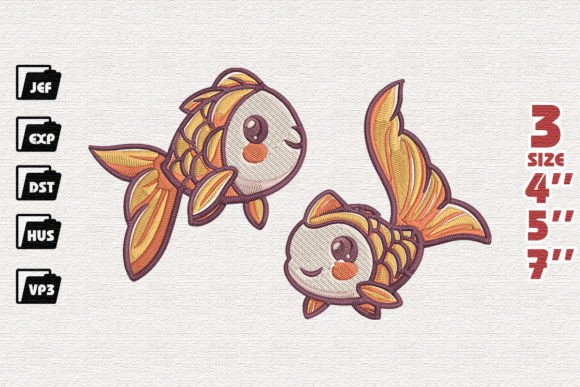
Cute Gold Fishes Embroidery: A Designer’s Practical Review
As a designer who spends half my life staring at digitized files and the other half watching needles pierce fabric, I have learned that not every machine embroidery design is created equal. Some look fantastic on a screen but turn into a tangled mess on the hoop. Others are simple yet strike the perfect balance between charm and stitchability. Today, I am taking a close look at Cute Gold Fishes Embroidery, evaluating it not just as a digital asset, but as a viable component for real-world commercial and personal projects.
My first impression of this design was its inherent playfulness. The theme is aquatic, but it avoids the cliché nautical tropes often seen in embroidery catalogs. Instead, it leans into a whimsical, almost storybook aesthetic. For those of us running a craft business or selling on Etsy, mood is everything. This design feels light, cheerful, and approachable. It does not scream for attention with aggressive density; rather, it invites the viewer in with soft curves and friendly shapes. This visual personality makes it an excellent candidate for products that need to feel handmade and heartfelt, such as personalized gifts or nursery decor.
Real-World Application: The Tote Bag Test
To truly understand how Cute Gold Fishes Embroidery performs, I mentally placed it on a canvas tote bag. This is a staple item for any small shop product line. The design’s layout is compact enough to sit comfortably on the side of a bag without overwhelming the fabric. When I visualize the stitching process, the flow of the fish shapes suggests a smooth run. There are no abrupt direction changes that typically cause thread breaks or bird nests.
However, context matters. If you are an Etsy seller looking to expand your design assets, consider where this fits best. It is ideal for home decor items like pillow covers or kitchen towels. Imagine a set of tea towels with a single gold fish embroidered in the corner. It adds a touch of elegance without being too formal. For custom apparel, it works beautifully on children’s clothing. A baby embroidery project, such as a onesie or a bib, benefits from the gentle nature of the design. Parents are drawn to soft, non-threatening imagery, and these gold fishes deliver exactly that.
Stitching Performance and Technical Considerations
From a technical standpoint, the success of any embroidery file depends on how it interacts with the machine and the material. While the specific stitch count and file formats are not detailed in the provided description, we can infer certain requirements based on the visual complexity. Designs with curved elements, like fish bodies, often rely on a combination of satin stitch for outlines and fill stitch for larger areas. If this design uses dense fill stitches, you must be cautious with stitch density.
High density can cause puckering, especially on lighter fabrics. If you are using this for sweatshirt embroidery, the thick fabric will support the weight of the threads well. However, if you plan to use it on a thin cotton shirt or a silky handmade product, you must use a high-quality stabilizer. I always recommend testing the design on scrap fabric first. This allows you to check for pull-outs and ensure the thread colors contrast nicely against the background.
Another critical factor is the hoop size. Since the description mentions it is suitable for various projects, it likely comes in multiple sizes. Always confirm the dimensions before purchasing. If you are working on a curved surface, like a cap or a hat, ensure the design fits within the usable area of your cap frame. Small details can get lost or distorted on tight curves, so inspect the smaller fins and tails closely in your preview software.
Navigating Fabric and Color Challenges
One of the joys of Cute Gold Fishes Embroidery is its versatility with color. Gold implies warmth, but in embroidery, "gold" can range from bright yellow to deep bronze. This gives you creative freedom. For a holiday embroidery gift, you might choose metallic threads to make the fish shimmer. For a more subdued, everyday look, standard polyester threads in mustard or ochre work wonderfully.
Be mindful of fabric texture. On textured materials like terry cloth or denim, fine details may disappear. If the design includes tiny eyes or intricate scales, these might merge into a blob on rough surfaces. In such cases, consider simplifying the color palette or using an applique design technique if the file supports it, though this appears to be a standard stitched design. For dark fabrics, ensure you use a bright underlay or choose thread colors that pop. A dark navy blue shirt with bright gold fish creates a striking, professional look that enhances brand consistency for boutique owners.
Commercial Viability and Customer Appeal
For commercial embroidery professionals, the question is always: will this sell? The answer lies in the emotional connection. This design evokes feelings of calm and joy. It is perfect for wedding gifts with an ocean theme, or for printable mockup previews that showcase a serene lifestyle brand. Customers trust designs that look clean and intentional. A messy stitch-out erodes trust; a crisp, well-executed fish design builds it.
When creating digital embroidery file listings or physical products, highlight the versatility. Show the design on a tote bag design, a patch, and a wall hanging. This helps buyers visualize the end result. Remember, buyer engagement increases when customers can see the product in their own lives. Use high-quality photos that show the texture of the stitches. Highlight the sheen of the thread and the smoothness of the curves.
Final Designer Notes
Before you commit to a large production run or list this as a new item in your shop, take these practical steps:
- Test on Scrap Fabric: Always run a test stitch-out on the same type of fabric you intend to use for the final product.
- Check Licensing: Confirm whether the license allows for commercial use. Most designers allow selling finished physical items, but reselling the digital file is usually prohibited.
- Review Stitch Density: If the design feels heavy, adjust your machine tension or use a tear-away stabilizer for better support.
- Contrast Check: View the design in black and white to ensure the shapes are distinct and not blending together.
- Wash Testing: If the item will be washed frequently, like a baby item or kitchen towel, ensure the threads are colorfast and the stabilizer is removed properly to prevent stiffness.
In conclusion, Cute Gold Fishes Embroidery is a charming addition to any designer’s library. It offers a blend of aesthetic appeal and practical usability that suits a wide range of projects. Whether you are creating a personalized gift for a friend or stocking your small business with unique home decor, this design holds up well under scrutiny. Just remember to respect the technical limits of your machine and fabric, and you will produce a finished product that delights both you and your customers.