Reviewing the Jeans Denim Embroidery Background
As a designer who has spent years staring at hoops, tweaking tension, and worrying about how a digital concept translates into thread, I approach every new asset with a healthy dose of skepticism. We are not just looking for pretty pictures; we are looking for utility, clarity, and commercial viability. When I first pulled up the Jeans Denim Embroidery Background Crafts files, my initial reaction was one of relief. In a market saturated with overly complex, stitch-heavy designs that eat up machine time and break needles, this set offers a grounded, textural alternative that serves as a perfect foundation for modern handmade goods.
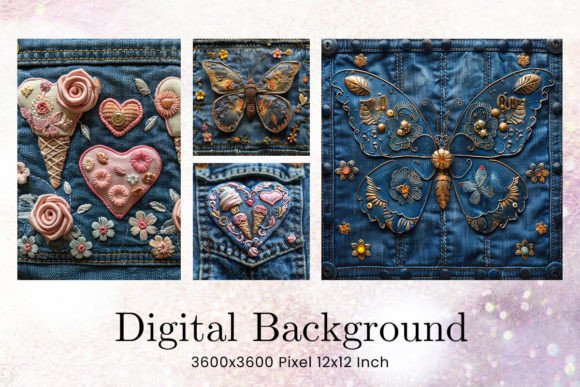
It is crucial to clarify right away what this product is and what it is not. This is a DIGITAL FILE consisting of a printable JPG download intended for use in sublimation or graphic design. It is not a physical patch, nor is it a native embroidery file format like PES or DST. You will receive four high-resolution JPG files at 300 DPI. For the embroidery community, this distinction matters. These graphics are best utilized as visual references, printable mockups for your Etsy listings, or sublimation transfers that can be combined with embroidered elements. Understanding this workflow is key to getting the most value out of the purchase.
The Aesthetic: Rugged Simplicity Meets Modern Craft
The mood created by these denim textures is instantly recognizable. It evokes durability, comfort, and a touch of rustic charm. The visual personality is understated yet rich, featuring the characteristic diagonal weave and faded indigo tones of worn jeans. For an embroidery designer, this background provides a "canvas" effect. Instead of stitching a solid fill which can look flat and plasticky on fabric, you can use this graphic to simulate the look of denim in your digital proofs or sublimated bases.
I immediately thought about how this would pair with white or cream-colored satin stitches. The contrast between the rugged, dark blue texture of the jeans graphic and the smooth, raised shine of embroidery thread is visually striking. It creates a layered look that feels expensive and thoughtful, even if the base material is a simple cotton tote or a standard sweatshirt.
Real-World Application: From Mockups to Merchandise
Let’s walk through a real-life scenario. Imagine you are preparing a custom order for a boutique client who wants a line of personalized tote bags. They want a "denim look" without the heavy weight and cost of actual denim fabric, which can be difficult to hoop and stitch due to its thickness. Here is where Jeans Denim Embroidery Background Crafts becomes a powerful tool in your design arsenal.
You can sublimate this high-resolution JPG onto a light-colored canvas tote bag. Once the transfer is complete, you have a realistic denim background permanently fused to the fabric. Now, you can hoop the bag and embroider names, logos, or floral motifs directly over the sublimated denim pattern. The result is a product that looks like a heavy-duty denim accessory but handles like a lightweight cotton bag. This technique drastically reduces production time and wear on your machine while maintaining a high perceived value for the customer.
This approach works equally well for sweatshirt embroidery. A heather grey hoodie can feel generic, but adding a sublimated denim pocket area using these graphics, then topping it with an embroidered patch or monogram, elevates the garment into a unique, boutique-style piece. For Etsy sellers and small shop owners, this allows for rapid prototyping. You can create stunning printable mockups to showcase your embroidery services without having to physically stitch every single variation for your online store.
Navigating Technical Constraints
While the aesthetic is strong, we must discuss where caution is needed. Since these are graphics and not native embroidery files, you cannot simply load them into your machine and stitch them out as thread. If you attempt to convert these JPGs into embroidery files using auto-digitizing software, the results will likely be poor. Auto-digitizers often struggle with the complex noise and texture of denim, creating erratic stitch paths, excessive jump stitches, and dense areas that will pucker your fabric.
Instead, use these backgrounds strategically. Be mindful of stitch density when adding embroidered elements on top. If you are stitching over a sublimated denim background, ensure your stabilizer is robust enough to handle the additional thread weight. For curved surfaces like caps, ensure the sublimation process does not distort the grain of the denim graphic, as this can make the final embroidered patch or logo look misaligned.
Also, consider color contrast. These backgrounds are predominantly blue. If you plan to embroider with navy or black thread, your details may get lost. Test your thread colors against the specific JPG file you choose. White, gold, silver, and bright pastels tend to pop best against this type of background. Always test the design on scrap fabric first to check for registration issues between the printed background and the stitched overlay.
Enhancing Brand Value and Customer Trust
In the world of craft business and handmade products, presentation is everything. Using high-quality assets like Jeans Denim Embroidery Background Crafts helps maintain brand consistency. It signals to your customers that you pay attention to detail, from the digital proof to the final finished product. When buyers see a cohesive look that mimics high-end textile design, their trust in your craftsmanship increases.
These graphics are particularly effective for holiday embroidery projects or personalized gifts where a rustic, homey feel is desired. Think of kitchen towels with sublimated denim borders and embroidered herbs, or baby items that use a soft, faded denim look for a gender-neutral nursery theme. The versatility of the four included files allows you to vary the intensity of the denim wash, giving you flexibility across different product lines.
Final Designer Notes
Before integrating these assets into your commercial workflow, keep a few practical tips in mind. First, confirm the licensing terms. While these are great for creating physical goods for sale, always double-check if the license permits unlimited commercial use for the number of items you plan to produce. Second, remember that resolution is key. At 300 DPI, these files are sharp, but scaling them up too large for a blanket or large wall hanging may result in pixelation. Keep your hoop size and final product dimensions in mind during the design phase.
Ultimately, Jeans Denim Embroidery Background Crafts is a smart addition to any digital designer’s library. It bridges the gap between traditional textile aesthetics and modern digital production methods. By using these graphics as a foundation for sublimation or as a realistic backdrop for your digital marketing, you can create unique, eye-catching products that stand out in a crowded marketplace. It is not just a background; it is a tool for storytelling, helping you convey quality and style before the needle even touches the fabric.