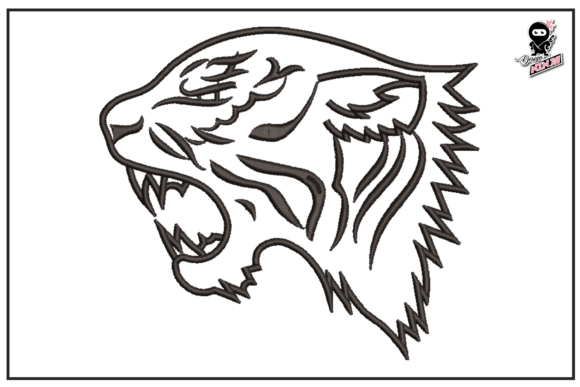
Roaring Tiger Outline: A Craft Fair Review
As an embroidery designer who has spent countless weekends behind a booth table, I know that not every machine embroidery design translates well from screen to sale. When I first loaded the Roaring Tiger Outline Embroidery into my software, I was looking for more than just aesthetic appeal. I was evaluating its potential as a high-converting craft fair product. In the competitive world of handmade goods, especially within the Wild Animals category, clarity and speed are everything. This review breaks down how this specific Embroidery asset performs in real-world production scenarios.
First Impressions and Visual Impact
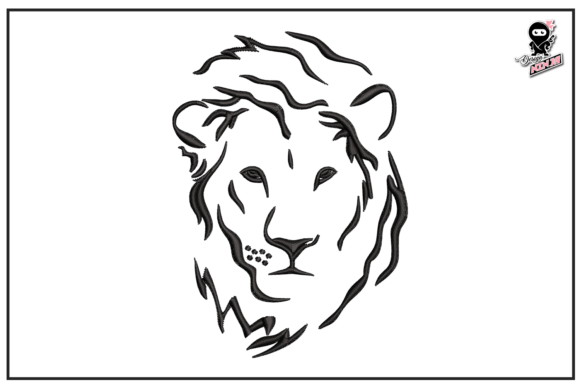
The immediate impression of the Roaring Tiger Outline Embroidery is one of bold minimalism. Unlike complex, photo-realistic designs that can look muddy from a distance, an outline style offers clean lines and modern graphic appeal. It feels contemporary rather than rustic, making it versatile for a wide demographic. For a busy craft fair aisle, this is crucial. Customers walking past your booth need to understand what they are looking at in under three seconds. The roaring tiger motif commands attention without being overly aggressive, striking a balance between fierce and fashionable.
This design does not rely on heavy fill stitches, which means it avoids the "cardboard" feel that sometimes plagues dense embroidery. Instead, it allows the fabric texture to shine through. This openness makes it feel premium and breathable, a quality that buyers often associate with higher-end boutique items.
Product Versatility for the Handmade Market
The true test of any digital embroidery file is its adaptability. Here is how the Roaring Tiger Outline Embroidery performs across various popular handmade product categories:
- Tote Bags and Market Bags: This is arguably the strongest application. A large-scale version of the tiger outline centered on a canvas tote creates an instant statement piece. It works beautifully as a tote bag design because the open stitching prevents the fabric from puckering under the weight of groceries or books.
- Aprons and Kitchen Textiles: For apron embroidery, placing the design on the bib or lower corner adds a playful yet sophisticated touch. It also excels in tea towel embroidery, where the lightweight fabric benefits from the low stitch count of an outline design.
- Embroidered Patches: If you offer iron-on or sew-on patches, this design is ideal. The clear boundaries of the outline make it easy to cut and finish. An embroidered patch featuring this tiger can be sold as a standalone accessory or used to customize denim jackets.
- Caps and Headwear: Curved surfaces are tricky. Because this is an outline, it has less bulk than filled designs, reducing the risk of distortion on the front panel of a cap. However, careful hooping is still required.
- Pillow Covers and Home Decor: On linen or cotton pillow covers, the design adds a modern artistic element. It fits well in nurseries for a Wild Animals theme or in living rooms for a contemporary eclectic look.
Production Efficiency and Batch Selling
For any Etsy seller or small shop owner, time is money. The Roaring Tiger Outline Embroidery is a dream for batch production. Since it lacks dense fill areas, it stitches out significantly faster than traditional designs. This speed allows you to produce more inventory in less time, lowering your cost per unit. Furthermore, the simplicity of the design means there are fewer opportunities for thread breaks or nesting issues, leading to a more consistent finished product.
When photographing for online listings, the high contrast of the outline against solid fabrics creates crisp, clean images. This visual clarity translates well into printable mockup tools, allowing you to create professional-looking design assets for your digital store without needing to physically stitch every color variation.
Critical Considerations for Quality Control
While the design is robust, there are practical notes every embroiderer should consider before launching this as a commercial embroidery product:
- Stitch Density and Stability: Even though it is an outline, you must check the stitch density settings in your software. Ensure the connecting ties are secure so the outline does not unravel after washing. Always use the appropriate stabilizer; a cut-away stabilizer is often safer for stretchy fabrics like t-shirts, while tear-away may suffice for woven totes.
- Thread Contrast: The success of an outline design hinges on contrast. Test your thread colors against your fabric choices. A dark thread on a dark fabric will render the tiger invisible. High-contrast combinations, such as navy on cream or black on white, yield the best results.
- Size Limitations: Be cautious when scaling down. Tiny details in the tiger’s face or whiskers may lose clarity if the design is made too small. Always stitch a test sample on scrap fabric at your intended size to verify legibility.
- Fabric Texture: Avoid highly textured fabrics like thick terry cloth for small versions of this design, as the loops can obscure the fine lines of the outline.
Designer Notes for Best Results
Before you list this as a small shop product, take these professional steps. First, confirm the hoop size compatibility with your machine. Second, review the license terms included with the digital embroidery file to ensure you have rights for commercial embroidery sales. Third, create at least one physical mockup to gauge the hand-feel and drape of the stitched item. Compare how the design looks on different fabric weights to offer your customers variety.
The Roaring Tiger Outline Embroidery is more than just a pretty picture; it is a strategic tool for your business. It offers the boldness needed to stop shoppers in their tracks at a craft fair, combined with the efficiency required to maintain healthy profit margins. By focusing on clean lines and versatile applications, this design supports brand consistency and enhances buyer engagement. Whether you are decorating clothing, home decor, or gifts, this machine embroidery design brings creativity and commercial viability to your workspace.